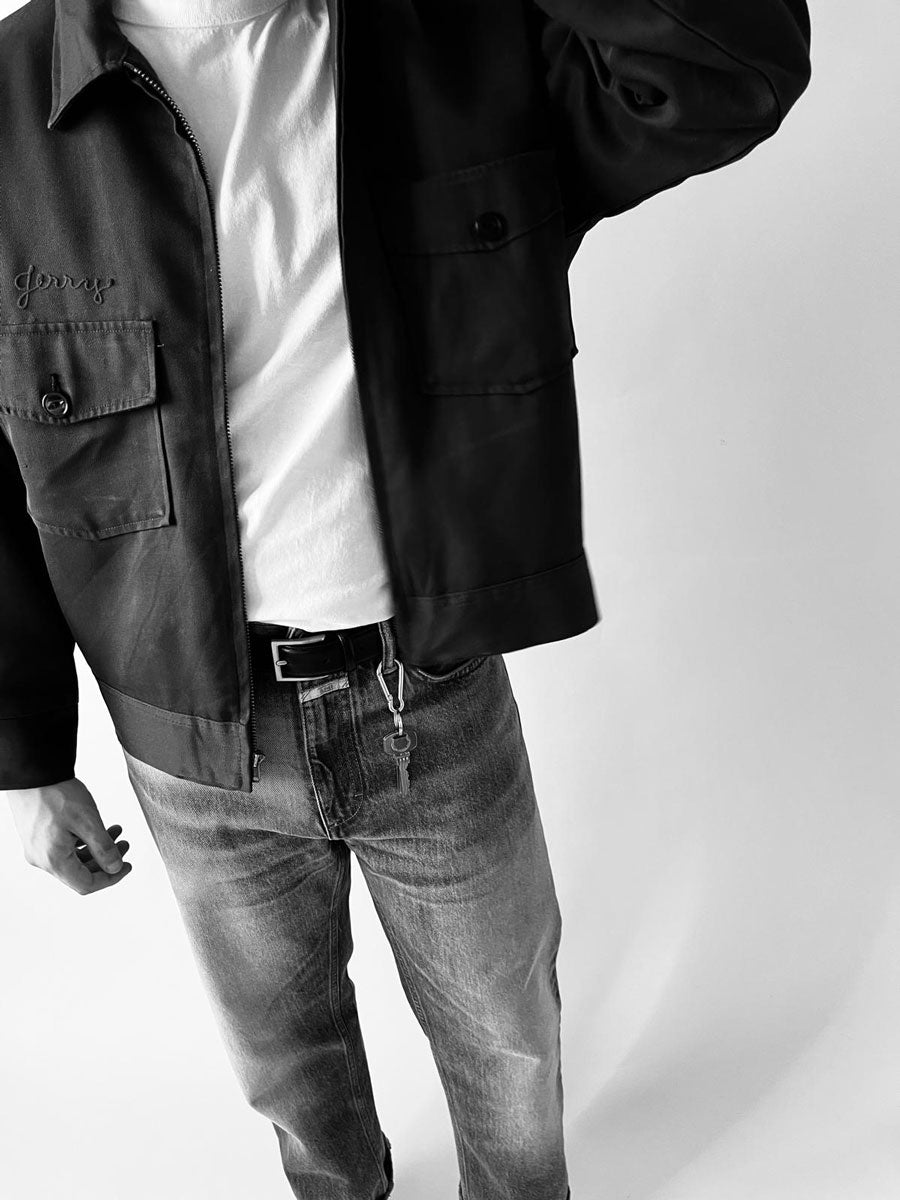
Trousers as an expression of function
Trousers are perhaps one of the most immediate elements for understanding the relationship between clothing and utility. Even before aesthetic differences, what changes is how they must be worn, the movement they must allow, and what they must contain. From these needs, some of the shapes that we now associate with workwear and vintage clothing were born.
Built for work
Vintage Work Pants tell a story of a tradition in which trousers had to support physically demanding activities without becoming an obstacle. Durable fabrics, easily accessible pockets, belt loops, and simple construction met concrete needs. In carpenter pants, for example, certain details were directly related to the tools used during work. The function thus remains legible in the construction, even when the garment is viewed today far from its original context.
Materials and proportions
The material profoundly influences how a pair of trousers fits and changes over time. Cotton twill, canvas, and other workwear fabrics can vary greatly in weight and structure, while a lighter construction provides an entirely different feel. Proportions also reflect a specific era and purpose: a wide leg, a straighter line, or a slimmer fit may stem from different habits and contexts. It is this relationship between fabric and form that makes the search for vintage pants so interesting.
Beyond workwear
Not all vintage trousers were designed for manual labor. Chinos represent a different, more essential tradition that has steadily become a staple of everyday wear. Their simplicity showcases another possibility for vintage trousers: less tied to functional details and more focused on fabric, proportion, and versatility. The Refade selection spans these differences without limiting them to a single interpretation, seeking out garments from different moments and contexts.
The result is a collection built over time through research and new discoveries. To continue the exploration you can visit Vintage Jeans or discover Military Pants.